

Renters' Rights Guide · Updated 2026
My Landlord's Washing Machine Broke — Your Rights & Where to Find a Launderette
Reported it. Heard nothing back. Meanwhile the laundry pile is developing its own ecosystem. Here's exactly what UK law says your landlord must do, how long they have to do it, and where to find a launderette in the meantime.
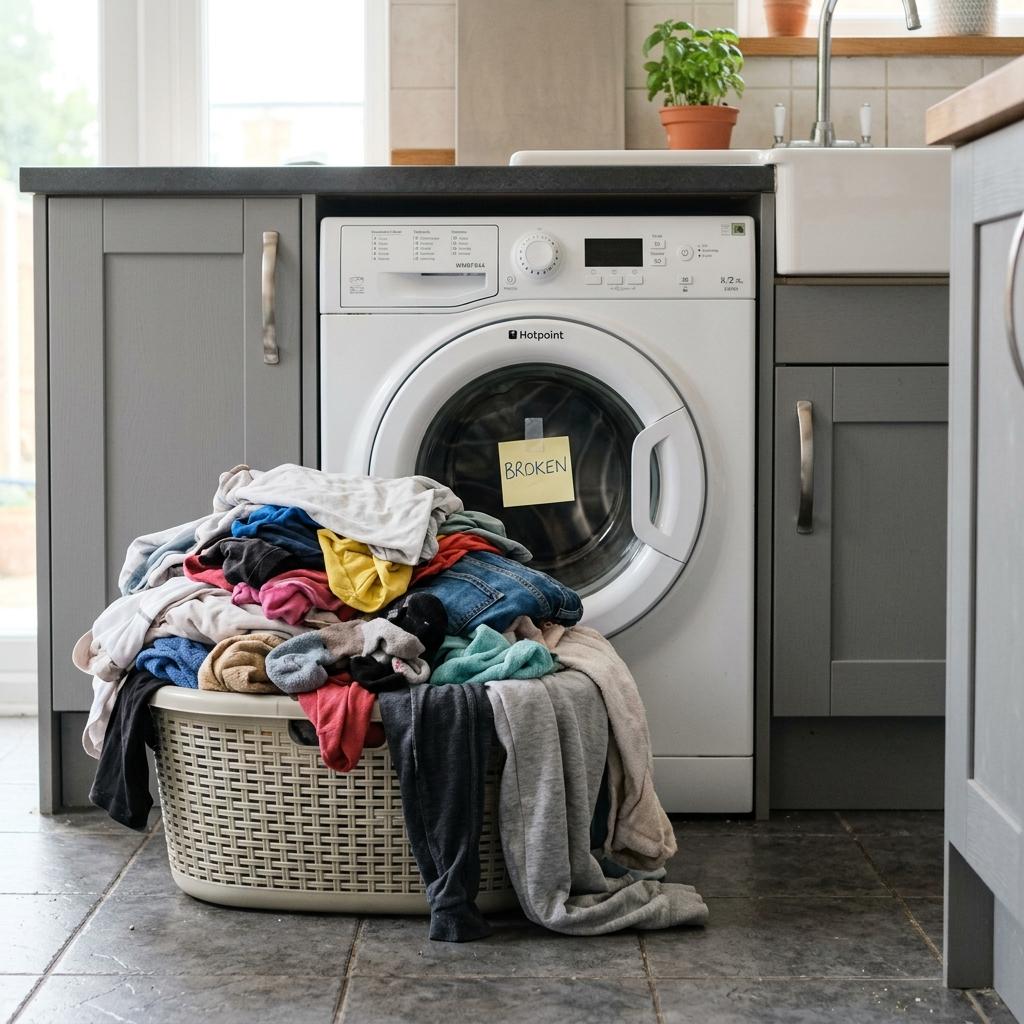
Your dirty laundry can't wait weeks for a landlord to organise a repair. Before diving into the legal detail, the most practical first step is sorting a nearby launderette while you chase the repair.
Over 1,300 UK launderettes listed with opening hours, payment methods, and machine sizes.
Step 1: Does the Machine Actually Belong to Your Landlord?
This single question determines everything else. The rule is simple:
- If the washing machine came with the property and appears on your inventory — it's the landlord's machine, and they're responsible for repairing or replacing it.
- If you brought the machine yourself, or had it installed — it's your machine, your responsibility.
The test isn't what the landlord claims. It's what your inventory says. If you moved in, signed an inventory that listed a washing machine among the property's contents, and it has since broken, that machine is legally the landlord's to fix. This also applies to machines that appeared to be “left by the previous tenant” — if it was listed on your inventory at the start of your tenancy, both parties accepted it as part of the let.
Check your move-in inventory right now.If the washing machine is listed, photograph the entry and save it. This is your primary piece of evidence if the landlord disputes responsibility.
What the Law Actually Says
Section 11 of the Landlord and Tenant Act 1985 sets out baseline repair obligations: structure, exterior, water/gas/electricity installations, and heating. Washing machines aren't explicitly listed in Section 11 — but that's not a loophole your landlord can exploit. If a washing machine is listed in your tenancy agreement or inventory as a landlord-provided appliance, they are contractually obligated to maintain it. Shelter and the NRLA both confirm this.
The Renters' Rights Act 2025, in force from 1 May 2026, doesn't change the specific appliance rules — but it abolished Section 21 “no-fault” evictions. This means you can report repair issues, chase them up, and escalate to your local council without the previous risk of a retaliatory eviction notice.
The Renters' Rights Act 2025In force from 1 May 2026, the Act abolished no-fault evictions. You can now push for repairs without risking your tenancy.
How Long Does a Landlord Have to Fix a Washing Machine?
The legal answer is: within a reasonable time. There is no statutory fixed deadline. Courts look at whether the landlord responded promptly to the report, arranged an inspection or repair visit, and whether any delay was logistically justified.
| Repair Type | Reasonable Timescale |
|---|---|
| Boiler / heating failure (winter) | 24–48 hours |
| Washing machine breakdown | 7–28 days depending on severity (no statutory deadline) |
| Non-urgent defects | Up to 28 days |
| Emergency structural damage | Immediate |
Courts do not accept: ignoring the report, repeatedly rescheduling, or taking several months for a non-complex appliance repair. Your best protection is a paper trail — report the fault in writing (text, email, or WhatsApp) so there's a timestamp, and follow up in writing if you don't get a response within a week.
Can You Claim Back Launderette Costs?
The honest answer: possibly, but it requires escalation. Courts have applied the principle that if you incur reasonable costs as a direct result of the landlord's failure to maintain an appliance they're responsible for, you may be entitled to recover them. In practice:
- Keep every receipt from the launderette — date and amount are essential.
- Report the fault in writing before incurring costs, so the landlord had the opportunity to fix it and chose not to.
- Raise the claim formally in writing first, then escalate to the Housing Ombudsman or small claims court if needed.
Small claims courts have awarded tenants reimbursement for launderette expenses in documented cases of landlord inaction. The threshold for success: landlord was notified, landlord failed to act in a reasonable time, you incurred costs as a direct result.
Do not withhold rent.Citizens Advice is explicit: withholding rent because of a repair failure puts you at risk of eviction proceedings, even if the landlord is clearly in the wrong. Keep paying rent and pursue the repair through formal channels.
What If Your Landlord Refuses to Act?
If you've reported the fault in writing and your landlord has ignored you or refused to repair the machine, work through these escalation steps:
Step 1: Written Formal Complaint
Send a letter (not just a text) stating the fault, the date you reported it, and a reasonable deadline for repair or replacement. Keep a copy.
Step 2: Your Local Council
Environmental Health teams have powers under the Housing Health and Safety Rating System (HHSRS) to inspect and require repairs. A pattern of disrepair triggers enforcement.
Step 3: Housing Ombudsman
Depending on your landlord type, the Property Ombudsman or Housing Ombudsman can adjudicate disputes and award compensation.
Step 4: Small Claims Court
For financial claims up to £10,000, the small claims track handles reimbursement for launderette costs and inconvenience. A few weeks of receipts is well within scope.
What not to do: Don't damage or dispose of the broken machine. Don't attempt to repair it yourself and deduct costs from rent without explicit prior written agreement from your landlord. Both create legal complications you don't need.
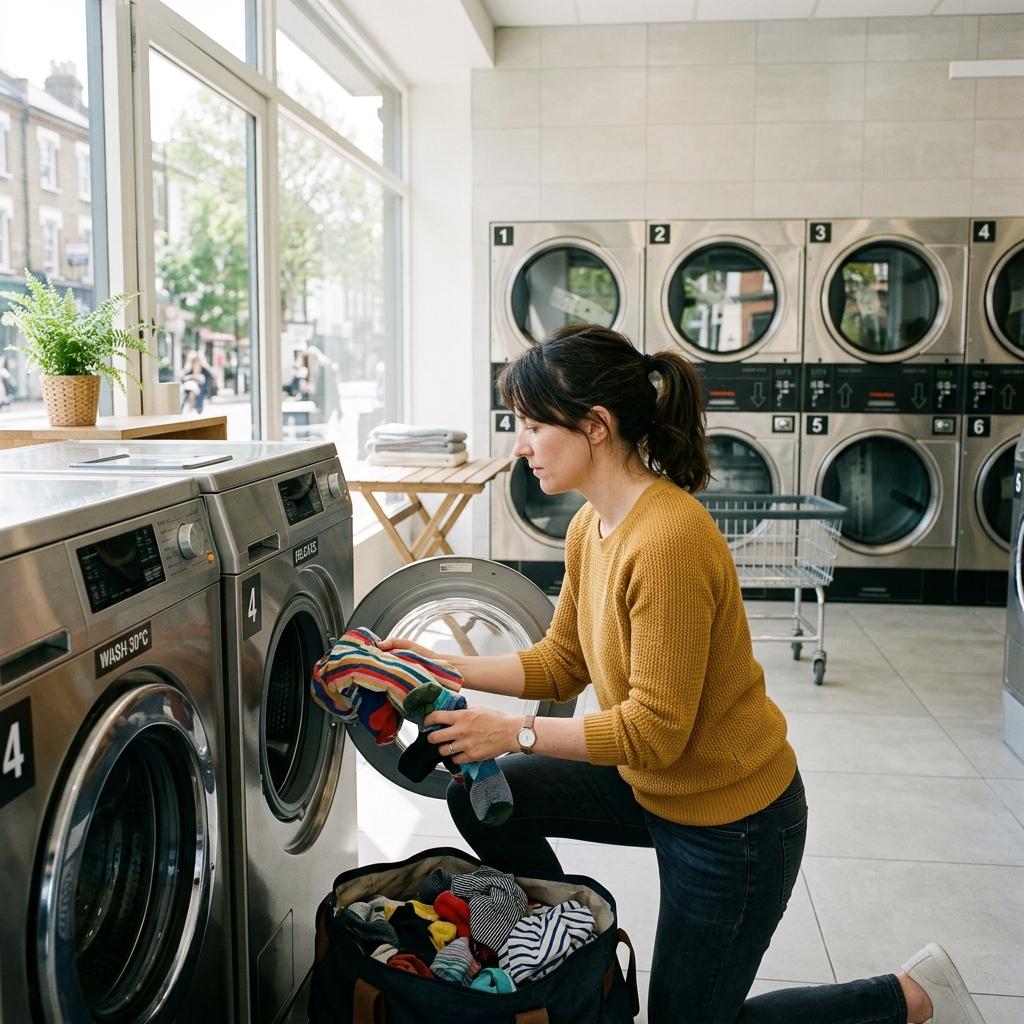
While You Wait: Finding a Launderette Near You
In the meantime, your clothes still need washing. The average self-service launderette visit costs around £8–14 for a standard wash and dry (60–90 minutes). Most now accept card as well as coins, and many are open early or late.
Keep every receipt with the date on it.These form the basis of any future cost recovery claim against your landlord.
What to Bring
- Your laundry, separated into colours and whites if possible
- Detergent — some launderettes sell it on-site, but it's cheaper to bring your own
- Payment card or coins — most UK launderettes now accept both
- Something to read — a standard wash cycle is around 30–40 minutes
For first-timers, our self-service launderette guide walks you through the whole process step by step. For a full breakdown of what a visit costs across different cities and machine sizes, see our UK launderette price guide.
A Note on This Article
findalaunderette.co.uk is a directory of self-service and service wash launderettes across the UK. The legal information in this article is general guidance, not legal advice. For complex disputes or significant financial claims, speak to Shelter, Citizens Advice, or a solicitor who specialises in housing law.
External sources referenced: GOV.UK private renting repairs · CIA Landlords — washing machine obligations
Frequently Asked Questions
Are landlords in the UK legally required to fix a washing machine?
If the washing machine was provided by the landlord and appears on your tenancy inventory, yes: the landlord is contractually obligated to maintain and repair it. Section 11 of the Landlord and Tenant Act 1985 does not cover appliances by default, but any appliance listed as part of the let becomes the landlord's responsibility under the tenancy agreement. If your machine isn't on the inventory (for example, if you brought it yourself) it's your responsibility.
How long does a landlord legally have to fix a washing machine in the UK?
The law requires repairs to be completed within a 'reasonable time.' There is no fixed statutory deadline for a washing machine. In practice, courts consider how quickly the landlord responded to your report, whether they arranged a visit or repair, and whether any delay was logistically justified. Minor repairs are generally expected within a few weeks; the more a delay is left unexplained, the weaker the landlord's position. Report the fault in writing to create a timestamped record.
Can I withhold rent if my washing machine is broken?
No. Withholding rent because repairs haven't been done puts you at risk of eviction proceedings, even if your landlord is in the wrong. Continue paying rent and pursue the repair through formal written complaints, council Environmental Health, the Housing Ombudsman, or small claims court.
Can I claim back the cost of using a launderette from my landlord?
Potentially yes, if the landlord was notified of the fault and failed to act within a reasonable time. Keep every launderette receipt with the date. The claim can be made via a formal written letter, and if refused, through a small claims court. Your case depends on having a clear written paper trail of when you reported the fault.
What does the Renters' Rights Act 2025 mean for repair disputes?
The Renters' Rights Act 2025, in force from 1 May 2026, abolished Section 21 no-fault evictions. You can now report repair failures and escalate them to your council without the previous risk of a retaliatory eviction. It doesn't change the specific appliance repair rules, but makes chasing your landlord significantly less risky.
What if my landlord says the washing machine isn't their problem?
Check your move-in inventory. If the machine is listed there, it was accepted by both parties as part of the let and the landlord cannot simply disclaim responsibility. If they continue to refuse, write a formal letter citing the tenancy agreement and inventory, and escalate to Environmental Health or the Housing Ombudsman if needed.
How much does a launderette cost while I wait for repairs?
A standard wash plus dry cycle at a UK launderette typically costs £8–14 and takes 60–90 minutes. Prices vary by city and machine size. Find your nearest launderette at findalaunderette.co.uk.