Comparison Guide · Updated 2026
Laundromat, Laundrette, Service Wash or Dry Cleaner: Which Do You Need?
Your washing machine is broken, or you don't have one, or you've just Googled “laundry near me” and Google has helpfully returned a list of places that are, in fact, completely different types of businesses.
The result is that you're now standing at the intersection of “laundromat,” “laundrette,” “launderette,” “laundry service,” and “dry cleaner” — five terms that sound interchangeable, mean very different things, and could easily result in you handing your favourite shirt to someone who is going to douse it in perchloroethylene. So let's sort this out.
Who Is Actually Googling This?
Before the comparison table (which is coming, don't worry, it's a good one), it's worth being honest about who ends up on an article like this. Based on the questions people actually ask Google around this topic, there are roughly four people:
- The broken machine situation: Washing machine died mid-cycle. Landlord has been “looking into it” for eleven days. You have a job interview on Thursday. This is probably the most common scenario.
- The new-to-UK visitor or student: Arrived from somewhere that uses the word “laundromat,” discovered that the British use “laundrette” instead, and are now confused about whether these are the same place. (They are.)
- The “I have a suit” problem: Someone is holding a blazer with a “dry clean only” label and wondering whether this means a trip to a launderette or somewhere else entirely. The answer is somewhere else entirely.
- The flat-renter without a machine: Either the landlord hasn't provided one, or the kitchen is the size of a shoe cupboard and there's genuinely no space, and they need to figure out a long-term laundry routine.
Different problems require different answers. Here is the full breakdown.
The Four Types of Laundry Service (Translated Into English)
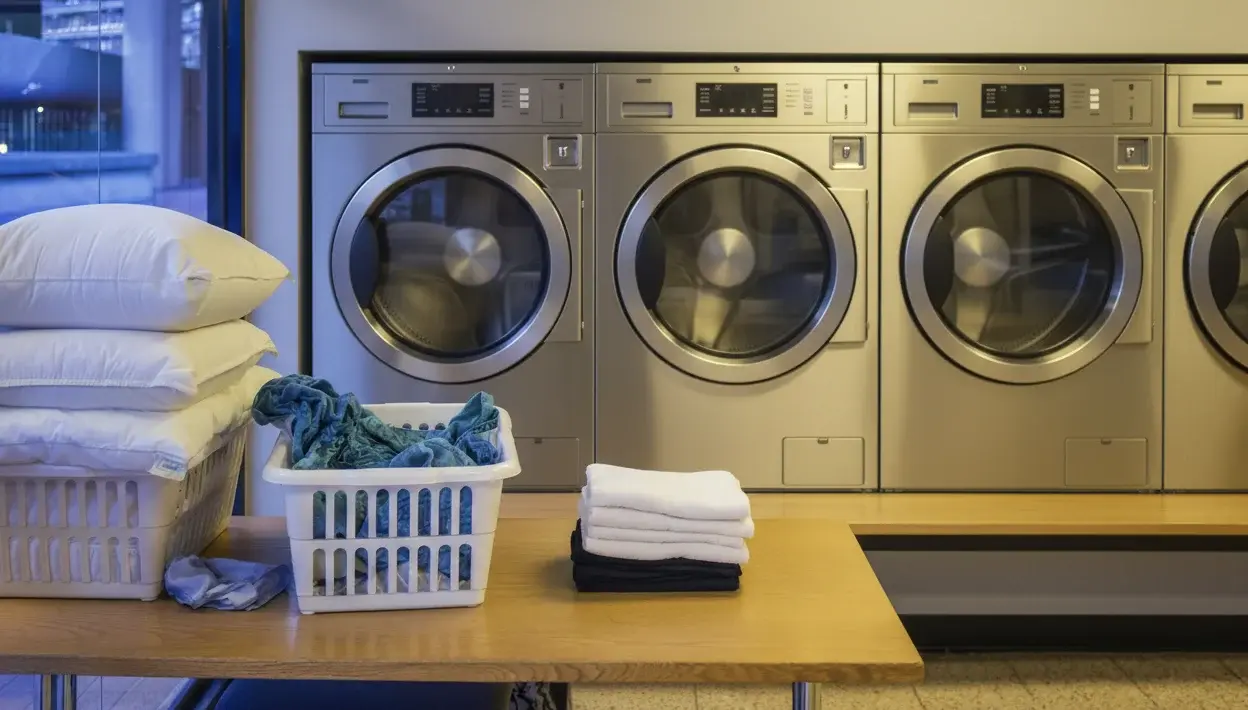
Laundrette / laundromat — same thing, different dialects. “Laundrette” (also spelled “launderette”) is the British term, inherited from the original 1949 launch at 184 Queensway in London, a site still operating today. “Laundromat” is American English and, despite being the non-British term, currently gets about three times more UK Google searches than “laundrette” does. You walk in, load the machines yourself, pay per cycle, and leave with clean clothes roughly 90 minutes later.
Service wash — this is the option that roughly 80% of people don't know exists, which is a genuine shame because it's often exactly what they need. Many launderettes offer a “service wash” or “wash and fold” alongside the self-service machines: you drop your bag off, the staff wash, dry, and fold everything, and you collect it later the same day or the next morning. Charged per kilo (typically £1.50–£3/kg) or per bag. It's not glamorous, but it is genuinely useful, and typically about half the price of pickup services.
Most people don't know this existsMany launderettes offer a service wash alongside their self-service machines — staff wash, dry, and fold your laundry for you. It's not always advertised, but it's always worth asking.
Pickup/delivery-only laundry service — you don't go anywhere. A courier comes to your door, collects your bag, and returns it clean within 24–48 hours. Companies like Laundryheap and Love2Laundry operate on this model. It is absolutely convenient, but costs meaningfully more than a local service wash for the exact same result.
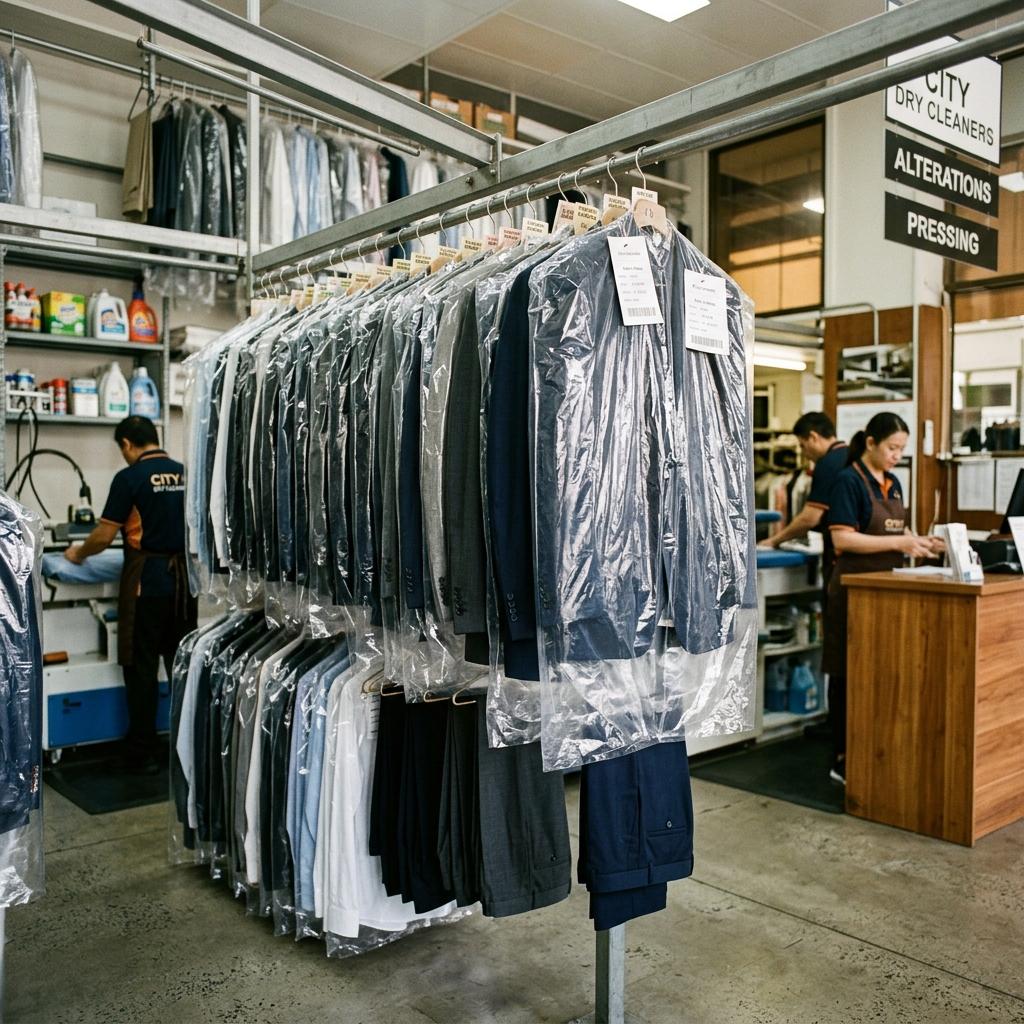
Dry cleaner — a completely different process from everything above. No water involved. Garments are cleaned using chemical solvents, which is why it's called “dry”: the fabric stays dry throughout as the solvent evaporates. Designed specifically for fabrics that a standard machine wash would permanently damage: wool, silk, cashmere, structured tailoring, formal wear. If you send your everyday laundry to a dry cleaner, you'll spend about five times more than you need to. If you put your dry-clean-only suit in a launderette drum, you'll get it back noticeably smaller and permanently damaged.
The Comparison Table
Tap or hover on the service types below to compare typical costs, turnaround times, and details.
Prices are approximate UK averages. See our full cost guide for city-by-city figures drawn from our live listings database.
Which One Actually Solves Your Problem?
Broken machine, or no machine in the flat
Go to a self-service launderette. Walk in, no booking, out in 60–90 minutes with everything clean and dry. The one thing most people don't know before their first visit: launderette machines come in a range of sizes, from 7kg standard washers up to 20–35kg drums built for duvets, curtains, and sleeping bags.
Even the smallest launderette machine typically matches or exceeds a home drum capacity. A single visit can handle what would have taken three separate loads at home. There is a genuine argument that occasional launderette use is cheaper than running a home machine once you factor in energy costs, water, detergent, and appliance depreciation. We've done that maths here.
If you'd rather not sit and wait, ask about a service wash at the counter. Drop the bag, go get a coffee, and come back.
New to the UK, confused by the terminology
A launderette (also spelled laundrette) and a laundromat are exactly the same type of place. The UK uses “launderette” or “laundrette”; much of the rest of the world uses “laundromat.” If you find one, you've found the other. Our directory has 1,300+ across the UK, searchable by location, opening hours, and payment type.
The “dry clean only” label situation
This label exists for a reason: the manufacturer tested what happens when you put this garment in a standard washing machine, and they didn't like the results. Wool shrinks, silk loses its sheen, and structured tailoring relies on internal construction that water and heat will permanently damage.
Which fabric goes where?
Launderette
- Cotton
- Polyester
- Linen
- Denim
- Towels & bedding
- Most everyday clothes
Dry Cleaner
- Wool
- Silk
- Cashmere
- Velvet
- Structured suits & coats
- Anything labelled “dry clean only”
When in doubt, check the care label.
Renting long-term without a machine
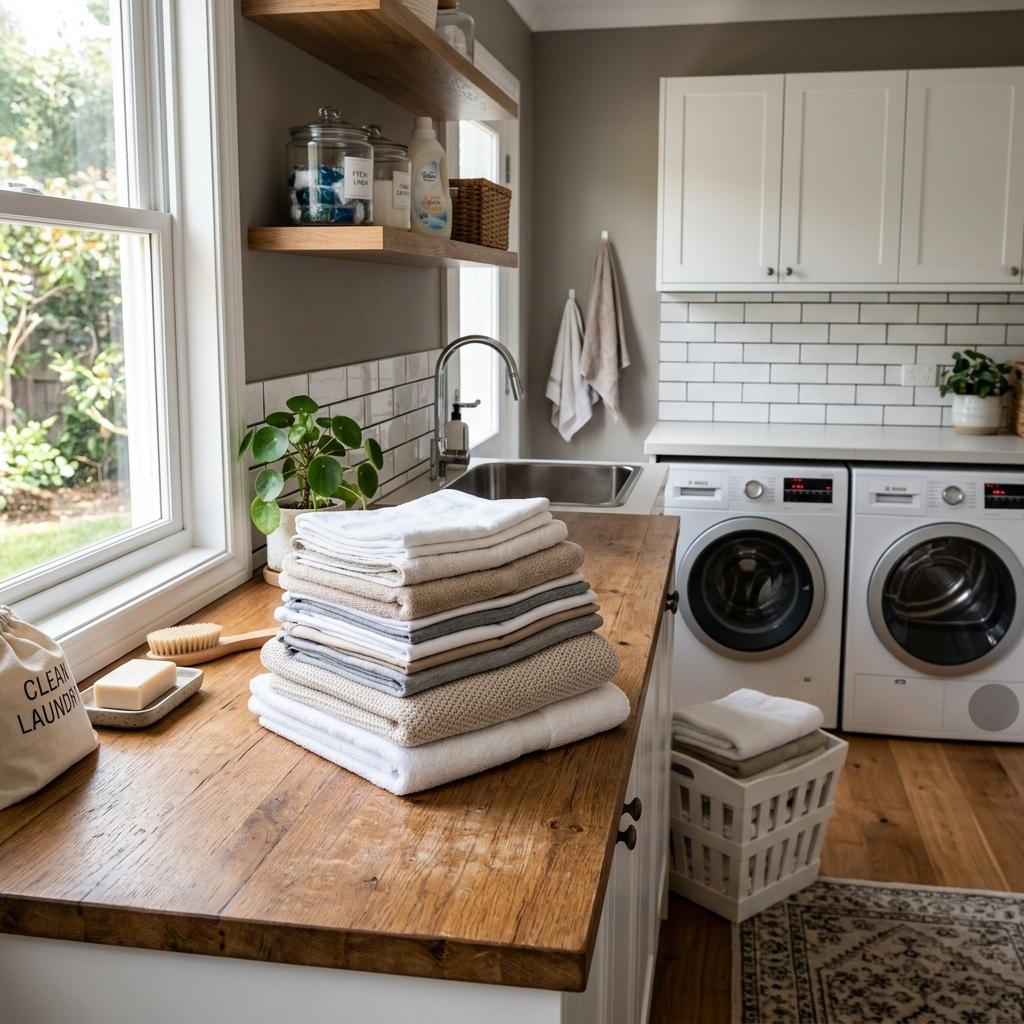
A service wash at a local launderette is usually the most practical regular solution. Drop off in the morning, collect the same day, and pay by the kilo. It is much cheaper than courier services and doesn't require you to sit in a shop watching a drum rotate.
A Few Things a Dry Cleaner Will Not Do
- Duvets: Most dry cleaners won't touch them, and those that do will charge high premiums. A self-service launderette with a large-drum machine (12kg+) is the correct answer for duvets and king-size bedding. See our duvet guide here.
- Bulk everyday laundry: Dry cleaning is priced per garment. Sending regular t-shirts, socks, and underwear to a dry cleaner would be a massive financial mistake.
- Stains on machine-washable clothes: For most everyday stains, a standard wash cycle does the job. Dry cleaners specialize in oil and grease on delicates, but they are not a general stain-removal service for everyday cottons.
What This Site Covers (And What It Doesn't)
findalaunderette.co.uk is a directory of self-service launderettes and service wash launderettes. We deliberately exclude dry cleaners and pickup/delivery-only services, because searching is already confusing enough without mixing everything together.
If you need a dry cleaner, Google Maps will do a better job than we can. If you are looking for a launderette or laundromat in the UK with verified machine sizes, opening hours, payment method filters, and community notes, search our 1,300+ UK listings here.
Frequently Asked Questions
Is a laundromat the same as a dry cleaner?
No. A laundromat (or laundrette) uses water and detergent, the same basic process as a home washing machine but in a larger commercial drum. A dry cleaner uses chemical solvents and no water at all. They are designed for completely different types of clothing and are not interchangeable.
What do British people call a laundromat?
A laundrette (also spelled launderette). The British invented the word in 1949. Laundromat is the American English equivalent and is widely understood in the UK, currently seeing higher online search volumes than the British term.
What is a service wash?
A service wash (also called wash and fold) is where laundrette staff wash, dry, and fold your laundry for you, typically charged per kilo or per bag. It's available at many launderettes alongside the self-service machines, though it's not always prominently advertised.
Is it cheaper to use a laundrette than washing at home?
Often yes, particularly for large loads. A commercial laundrette drum takes 10–12kg in one wash, the equivalent of two or three home loads. Factoring in electricity, water, detergent, and machine maintenance, the launderette compares surprisingly well on cost.
Can a laundrette handle dry-clean-only items?
No. If the label says dry clean only, machine washing it risks shrinkage, distortion, or permanent fabric damage. It needs a dry cleaner.
What's the difference between a service wash and a pickup/delivery laundry service?
With a service wash, you drop off and collect from a launderette yourself: cheaper, same-day or next-day turnaround. With a pickup/delivery-only service, a courier comes to your door: more convenient, but meaningfully more expensive for the same outcome.