
Can You Just Use the Dryers at a Launderette?
Usually, yes. Self-service dryers are paid for separately from the washers, so you can take washing you did at home to a launderette and pay for the dryers alone: a typical 30-minute dry costs about £3.87. It is the owner's decision, so check before you travel. Below: what it costs, how long it takes, and when drying at home is the better deal.
Can You Use Just the Dryers?
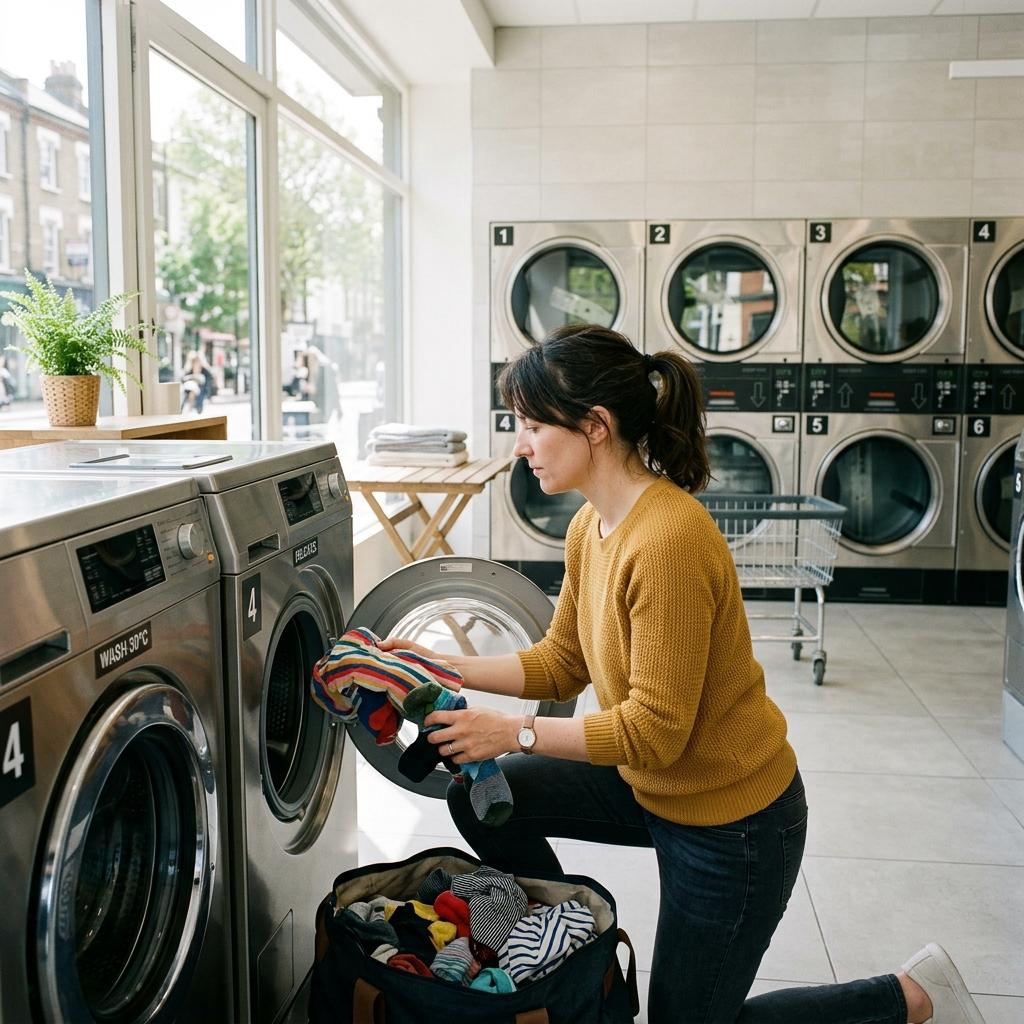
Usually, yes. Self-service dryers are paid for separately from the washers, by the minute or by the cycle, so nothing about the machines ties a dry to a wash. Whether the sign outside says launderette, laundrette or laundromat, you load the drum, pay, and start it.
It is the owner's decision, though, and policies differ. One launderette on this directory adds £2 to the dryer cost when the washing was done elsewhere. A quick look at the listing, or a phone call, settles it before you carry a bag of wet towels across town.
One rule applies everywhere: the washing has to be clean. Wash.ME, which runs the Revolution Laundry machines found in supermarket and petrol station car parks, forbids drying dirty or greasy clothes because of the fire risk.
Three things to check firstAsk whether drying only is allowed, whether there is a minimum spend or an extra charge, and how the dryers take payment. Some sites are card only and some dryers take coins only.
What Launderette Drying Costs
Dryers are sold by time. Some launderettes charge by the minute, some per 10, 15 or 20 minutes, and some per cycle, so the UK Launderette Price Index converts every timed price to the cost of 10 minutes.
In the Q4 2026 edition, 10 minutes in a dryer costs a typical £1.29, based on 85 launderettes. Half of them charge between £1.00 and £2.00. That makes a 20-minute dry about £2.58, and a 30-minute dry, the index's figure for an ordinary load, about £3.87.
Two published price lists show the spread. Johnsons the Cleaners charges £3.50 for a 15-minute cycle in a 20 kg dryer at its self-service sites. One independent on this directory charges 50p per 3 minutes 45 seconds with a £3 minimum, so the smallest dry there is £3.
If you are weighing up the whole routine, not only the drying, the cost calculator compares a year of washing at home with a year at the launderette.
How Long a Launderette Dryer Takes
Operators quote well under an hour. Wash.ME lists its drying programmes at between 15 and 30 minutes, and its FAQ gives 15 to 45 minutes as the working range, depending on the type and weight of the laundry. The price index uses 30 minutes for an ordinary load.
Home methods are slower. Which? has tested tumble dryers that take anywhere from 14 to 40 minutes per kg of laundry, which for a 5 kg load is between 70 minutes and well over three hours. A heated airer typically takes four to five hours for a small cotton load.
The drums are bigger too. Wash.ME's dryers hold 18 kg and Johnsons' hold 20 kg, which is room for large items or a large quantity of laundry in one go. If the bulky item is bedding, our guide to washing a duvet at a launderette covers drying it properly.
Launderette Dryer vs Drying at Home: Cost per Load
Here is the honest version. Per load, the launderette is the most expensive way to dry washing. What you get for the money is speed, a big drum and no machine to buy.
| Method | Cost per load | Time | What else to know |
|---|---|---|---|
| Launderette dryer | About £3.87 (30 minutes) | 15 to 45 minutes | Nothing to buy. You travel and wait. |
| Heat pump tumble dryer | About 35p | 14 to 40 minutes per kg | Around £730 to buy on average |
| Condenser tumble dryer | About 89p | 14 to 40 minutes per kg | From around £220 to buy |
| Vented tumble dryer | About 90p | 14 to 40 minutes per kg | From around £220 to buy |
| Heated airer | About 35p small load, 92p large load | 4 to 5 hours for a small load | The moisture stays in the room |
| Dehumidifier | About 6p an hour | No per-load time published | Lowers the risk of damp and mould |
Home figures are Which? yearly running costs for 3 loads a week, divided by 156 loads, at the October to December 2026 price cap rate of 26.32p per kWh (the cost calculator on this site rounds that to 26p). Which? tests dryers and airers with different load sizes, so compare those rows loosely. The dehumidifier figure is the Which? Best Buy average. The launderette figure is the Q4 2026 price index, from 85 launderettes.
When Buying a Dryer Pays for Itself
A 30-minute launderette dry costs more than 4 times a condenser load at home. Against that gap, a £220 condenser or vented dryer pays for itself after about 74 loads, which is 25 weeks at 3 loads a week. A £730 heat pump dryer takes about 207 loads, then costs about 35p a time.
So if you have the money, the space, and several loads a week to dry all winter, buy a dryer. The launderette cannot beat a heat pump dryer on price and this page will not pretend it can.
When the Launderette Wins
- You have no dryer and no plan to buy one. There is nothing to pay up front, and an occasional dry takes a long time to reach the break-even point above.
- The load is big. An 18 kg or 20 kg drum takes large items and large quantities in one go.
- You need it dry today. Launderette operators quote 15 to 45 minutes. A heated airer needs four to five hours for a small load.
- Your home is already damp. See the warning below.
- Your own dryer has stopped working. Launderette dryers cover the gap while you decide whether to repair or replace it.
Drying indoors and dampOne load of wet washing holds almost two litres of water, which is released into the room as it dries, according to the National Aspergillosis Centre at the University of Manchester. Its advice is to dry washing outside, in a tumble dryer, or in a well ventilated indoor space away from bedrooms and living areas. Which? adds that moisture from heated airers often collects in the corners of ceilings, where mould can grow.
It does not suit everyone. If you already own a working dryer, or you dry several loads a week through the winter, home drying costs less. The laundromat run earns its keep for the big loads, the urgent ones, and the flats where wet washing has nowhere good to go.
How to Cut the Cost of a Dry-Only Visit
You pay for minutes, so every minute saved is money saved.
- Spin it again at home. A higher spin speed removes more moisture, and the less wet the washing is, the less time and energy a dryer needs.
- Take only what needs it. A smaller load finishes more quickly. Bring the things you need dry today and air the rest at home.
- Do not cram the drum. An overfilled dryer stops the air circulating properly.
- Buy time in stages. Where a dryer is priced per 10 minutes, pay for 20, feel the load when it stops, and add 10 more only if it needs it.
- Ask about extras before you load. A minimum spend or a charge for washing done elsewhere changes the sum on a small load.
Find a Launderette With Dryers Near You
Search by postcode or town, then check each listing for prices, payment types and opening hours. The self-service launderette pages list the ones where you work the machines yourself, which is what a dry-only visit needs. New to all this? Our first-time laundrette guide walks through the machines and the payment.
Frequently Asked Questions
How much does it cost to use a dryer at a laundrette?
Ten minutes in a launderette dryer costs a typical £1.29, based on prices from 85 UK launderettes in the Q4 2026 edition of the UK Launderette Price Index. Half of them charge between £1.00 and £2.00. A 30-minute dry for an ordinary load comes to about £3.87.
Can you use a dryer only at a laundromat or launderette?
Usually, yes. Self-service dryers are paid for separately from the washers, so you can bring clean, wet washing from home and pay for drying alone. The decision belongs to the owner: some launderettes add a small charge for washing done elsewhere, so check the listing or phone before you travel.
How long does a laundrette dryer take?
Operators quote between 15 and 45 minutes. Wash.ME, which runs the Revolution Laundry machines, lists its drying programmes at between 15 and 30 minutes and says an optimal drying time varies between 15 and 45 minutes depending on the type and weight of the laundry. This site's price index uses 30 minutes for an ordinary load.
Can clothes dry in 30 minutes in a dryer?
In a launderette dryer, 30 minutes sits inside the 15 to 45 minutes that operators quote for a load. In a home tumble dryer a full load takes longer: Which? has tested dryers that take anywhere from 14 to 40 minutes per kg of laundry, which is 70 minutes or more for a 5 kg load.
Is it cheaper to dry clothes at home or at a launderette?
At home, per load. Worked out from Which? running costs at 26.32p per kWh, a load costs about 35p in a heat pump dryer and about 89p in a condenser dryer, against about £3.87 for 30 minutes in a launderette dryer. The launderette is the better choice when you have no dryer, a bulky load, or nowhere to dry washing without making the room damp.
Do tumble dryers use a lot of electricity?
Uswitch puts an average tumble dryer cycle at 3 kWh, which costs 79p at 26.32p per kWh. The type matters: Which? puts the average yearly running cost at £54.32 for a heat pump dryer, £138.91 for a condenser dryer and £139.74 for a vented dryer, based on three cotton loads a week.
Is a heated airer cheaper than a tumble dryer?
For small loads, a heated airer costs about the same as a heat pump dryer and less than a condenser or vented dryer. Which? found heated airers cost an average of 7p an hour and take four to five hours to dry a small cotton load: £55 a year for three small loads a week. For three large loads a week the cost is £143 a year, slightly more than the £138.91 Which? gives for a condenser dryer.
Find a launderette near you
Compare opening hours, prices, payment options and reviews before you travel.
More launderette guides
- Renting a Flat With No Washing Machine: Your Complete Laundry Options (UK 2026)
- My Landlord's Washing Machine Broke — Your Rights & Where to Find a Launderette
- Is It Worth Repairing a Broken Washing Machine? (And What to Do in the Meantime)
- Laundromat, Laundrette, Service Wash or Dry Cleaner: Which Do You Need?
- How to Do Laundry at University: On-Campus, Launderettes, and What It Actually Costs
- How Much Does a Launderette Cost in the UK?
- Can You Wash a Duvet at a Launderette?
- First Time at a Launderette: Step-by-Step Guide
- Your Complete Guide to Using Coin Laundry in the UK
- Is a Launderette Quicker Than Doing Laundry at Home?
- What Is a Service Wash? How It Works and What It Costs
- Circuit Laundry: Prices, Cycle Times and What to Do When a Machine Won't Start